

“Can I add one more?” and “I ordered too many—can you remove a line?” are among the most common post-purchase messages Shopify merchants receive. The honest answer is: sometimes, depending on inventory, payment status, and whether fulfillment has already started.
This article explains quantity changes from a merchant and operations perspective—what Shopify admin allows, when manual support is unavoidable, and how a defined order-edit period before ship can reduce back-and-forth.
Quick answer
Yes, in many cases you can change quantity on a Shopify order before it ships, as long as the line items are still unfulfilled, inventory is available, and your payment and discount setup allows the new order total.
No, or not easily, once the order is fulfilled, partially fulfilled, or locked by your warehouse or subscription rules—quantity changes may require refunds, new orders, or manual adjustments instead of a simple line-item edit.
What Shopify lets you do in admin
For unfulfilled orders, staff with the right permissions can often:
- Increase quantity on an existing line (if stock exists at the assigned location).
- Decrease quantity or remove a line before pick.
- Add a new product to the order in some workflows (depending on apps and payment state).
Each change may recalculate discounts, taxes, and shipping. If payment was already captured for the original total, increasing quantity usually means collecting additional payment or sending a payment link. Decreasing quantity may require a partial refund.
Document these steps for your support team so “quantity change” tickets follow one playbook instead of ad hoc refunds.
Before fulfillment vs after fulfillment
| Stage | Quantity change |
|---|---|
| Unfulfilled, payment open or captured | Usually editable in admin or via an approved self-service flow |
| Partially fulfilled | Change remaining unfulfilled quantities; already-shipped lines need returns or reship policies |
| Fulfilled | Treat as post-delivery support (return, exchange, or goodwill credit) |
The word “before it ships” really means before fulfillment completes in Shopify—not merely before the customer receives the package.
Partial quantity changes (keep some, drop some)
Customers rarely want to cancel an entire order when they only bought one size too many. Partial line reductions are operationally cleaner when:
- Inventory can be restocked when quantity drops.
- Bundles and “buy X get Y” promotions still validate after the edit.
- Your 3PL receives an updated pick list before the batch runs.
If your promotions break when quantities change, support will keep doing manual refunds even when Shopify technically allows an edit. Review discount apps and automatic discounts before enabling broad self-service quantity changes.
Payment and order total considerations
Quantity edits change the order total. Merchants should decide in advance:
- Increases: Whether customers can pay the difference self-service or must contact support.
- Decreases: Whether you auto-refund to the original payment method or issue store credit.
- Installments and wallets: Some payment methods restrict lowering authorized amounts; support may need to cancel and reorder instead of editing in place.
This is general ecommerce guidance—not tax or legal advice. Confirm rules with your payment providers for your markets.
Inventory and overselling risk
Raising quantity after checkout consumes stock that other buyers may also be checking out. If you allow post-purchase quantity increases:
- Tie edits to real-time inventory at the fulfillment location.
- Set a time limit so edits do not run indefinitely while stock is reserved elsewhere.
- Communicate clearly when an item is no longer available to add.
Decreasing quantity before ship can free stock for waiting customers—another reason to resolve quantity questions before the warehouse picks the order.
Customer self-service vs support-led edits
Support-led edits in admin work for low volume. During launches or holidays, the same requests repeat at scale.
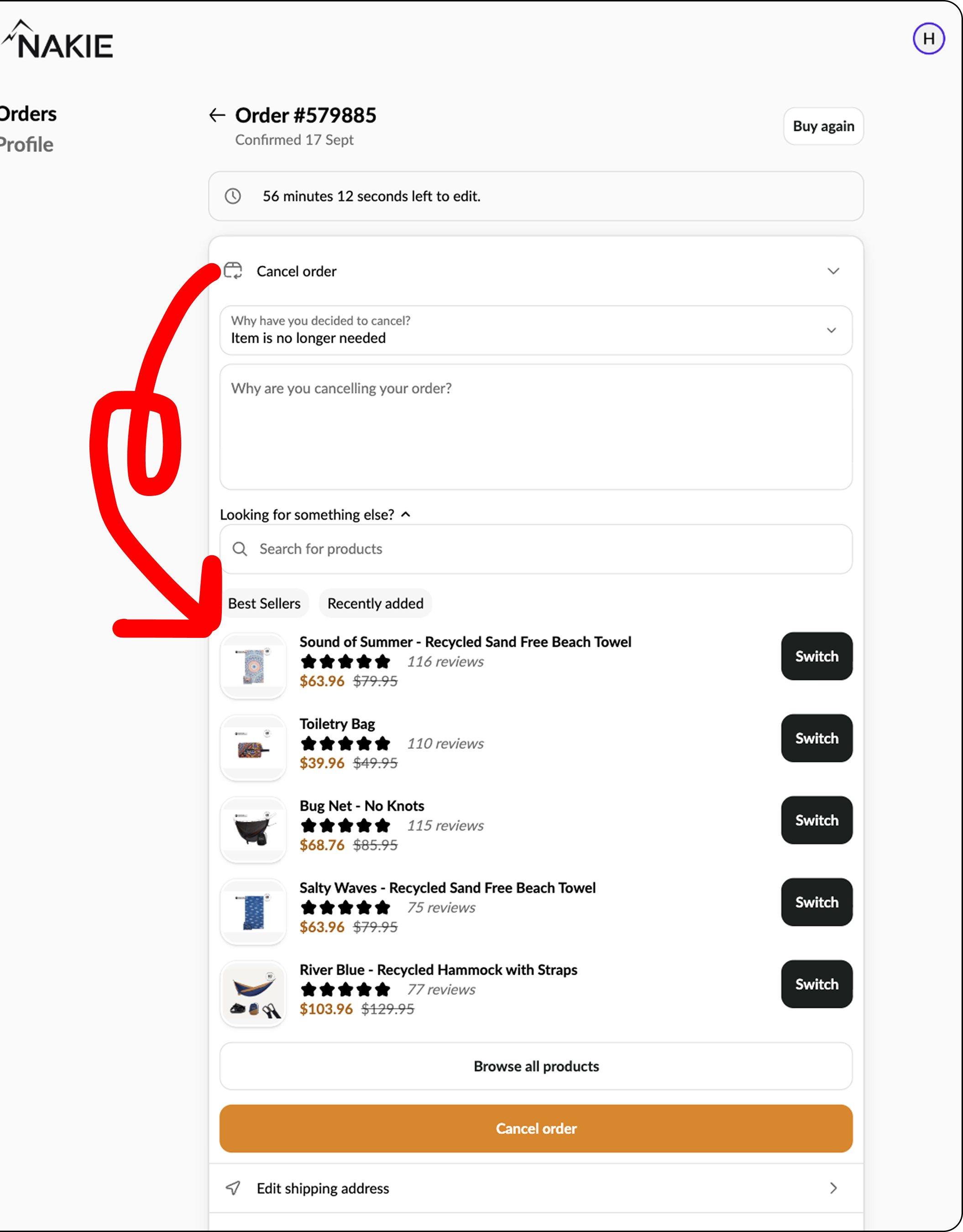
Some merchants expose quantity changes (within rules they define) on the order status page or customer account during a post-purchase editing window—alongside address or line-item updates. Apps such as Order Editing on the Shopify App Store market this as self-service order-edit capability before fulfillment; you configure what customers may change and for how long.
Whether you use an app or stay admin-only, the operational principle is the same: define the editing window, then release the order to fulfillment.
Scenarios that commonly block quantity edits
Even “before ship,” these situations often force a manual workaround:
- Subscription or prepaid bundles where line structure is owned by a subscription app.
- Custom or made-to-order lines already sent to production.
- Marketplace or multi-vendor splits where one vendor has already acknowledged the line.
- Digital delivery where the product was fulfilled automatically at purchase.
Train support to check these flags before promising a quantity fix.
FAQ
Can customers change quantity themselves on Shopify?
Native Shopify checkout does not let buyers return later and change quantities on a completed order. Merchants implement post-purchase quantity changes through staff in admin, custom development, or a self-service editing app with merchant-defined rules.
Does reducing quantity before shipment automatically refund the customer?
Not always. Refund behaviour depends on whether payment was captured, your refund policy, and how your team processes partial refunds. Automate where your payment stack allows it; otherwise document manual refund steps.
Can I increase quantity if the variant is out of stock?
Shopify will block increases that exceed available inventory at the relevant location unless your process allows overselling or pre-orders. Self-service flows should show a clear out-of-stock message instead of failing silently.
How do quantity edits interact with fulfillment holds?
Fulfillment holds (keeping an order unreleased to the warehouse) give you time to apply quantity edits safely. When the hold releases, the pick list should reflect the final quantities.
Is it better to edit the order or create a new one?
Editing preserves order history and attribution; a new order can be simpler when payment cannot be adjusted. Many teams edit for small changes before ship and create a new order for large upsells after capture limits block increases.
Summary
You can change quantity on a Shopify order before it ships in plenty of real-world setups—when lines are unfulfilled, stock exists, and payment can be reconciled. The constraint is not Shopify’s checkout screen; it is fulfillment timing, inventory, and how your stack handles totals after checkout.
A clear editing window, synced warehouse data, and optional self-service order-edit paths turn repetitive quantity questions into a controlled process instead of a support backlog. If you evaluate third-party tools, compare them against your cut-off times and refund policy; Order Editing is one Shopify App Store option merchants use for customer-initiated changes before release to the warehouse.
For configuration details, browse the Order Editing documentation on orderediting.com.