

“I ordered a medium but I need a large.” For fashion and apparel brands on Shopify, size mistakes are among the highest-volume post-purchase messages. The fix is not always the same: sometimes you can edit the order before the warehouse picks it, sometimes you need a return or exchange after delivery, and sometimes cancel and reorder is the only clean path.
This guide compares those three paths for merchants and CX leads—without assuming every store has the same apps or warehouse setup.
Quick answer
| Path | Best when | Main trade-off |
|---|---|---|
| Edit before fulfillment | Wrong variant is still unfulfilled, stock exists, payment can be adjusted | Requires a defined editing window and synced inventory |
| Return or exchange | Package shipped or delivered; customer can send item back | Restocking, shipping cost, and slower resolution |
| Cancel and reorder | Payment or promotions block in-place edits; customer wants a fresh checkout | Loses original order context; may affect attribution and discounts |
There is no single “always do X” rule. Your policy should name which path applies at each fulfillment stage.
Why wrong-size tickets dominate apparel support
Sizing is subjective. Customers guess between two sizes, order both and plan to return one, or discover a fit issue only after trying the garment at home. Size charts reduce but do not eliminate mistakes.
For operations, wrong-size requests cluster in two windows:
- Minutes to hours after checkout, while the order is still unfulfilled.
- After delivery, when try-on confirms the fit is off.
Training support to identify which window applies prevents promising an “easy swap” when the pick list already left the building.
Path 1: Edit the order before fulfillment
If the customer contacts you—or uses self-service—before the order ships, changing the line to the correct variant is often the best experience:
- Same order number and confirmation email thread.
- No return label or warehouse receipt process.
- Faster correction if inventory exists at the assigned location.
What merchants should verify
- Inventory: The correct size is available at the fulfillment location tied to the order.
- Payment: If the new variant costs more or less, your process can capture the difference or issue a partial refund (subject to your payment provider’s rules).
- Promotions: “Buy one get one” or tiered discounts may need recalculation when the variant changes.
- 3PL sync: Admin edits in Shopify must reach your warehouse before pick; otherwise the wrong size still ships.
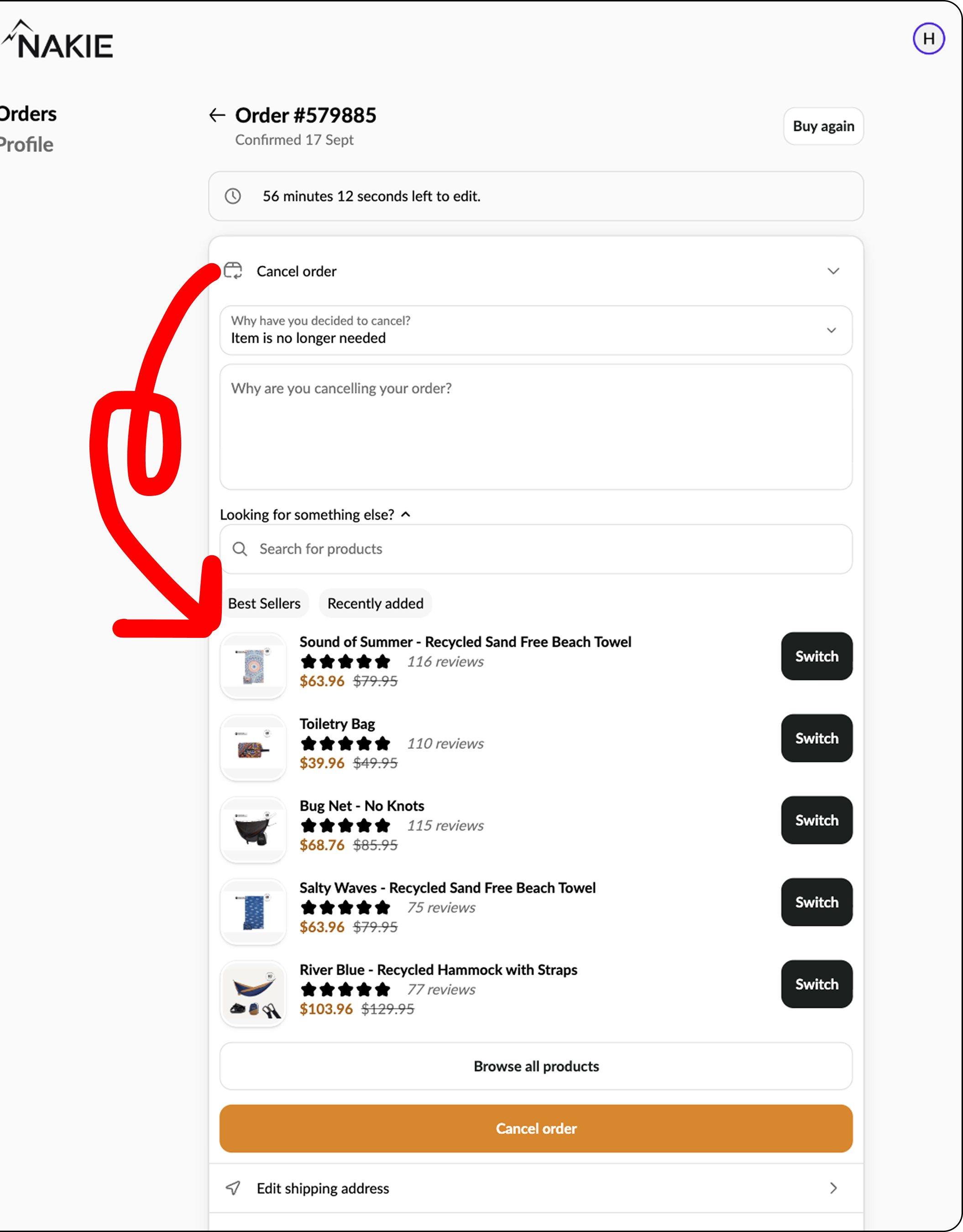
Some merchants expose variant or size changes during a post-purchase order-edit window on the order status page or customer account. Public apps on the Shopify App Store—including Order Editing—market self-service changes before fulfillment; you define what customers may change and for how long. Admin-only edits work too if volume is low.
When editing is a poor fit
- Made-to-measure or personalized lines already in production.
- The desired size is out of stock everywhere you ship from.
- Payment methods that cannot adjust authorization after capture (support may need cancel-and-reorder instead).
Path 2: Return or exchange after delivery
Once the order is fulfilled, editing the original line in place usually stops being an option. The standard retail path is return, exchange, or store credit under your published policy.
Customer experience
Exchanges feel fair when:
- Return shipping is clear (free, flat fee, or customer-paid).
- Replacement size is reserved or shipped quickly after the return is scanned.
- Messaging sets expectations on timing (especially for international returns).
Merchant cost and inventory
Returns consume labor (receiving, QC, restock) and may leave inventory unsellable if tags are removed or items are worn. Exchanges tie up two units briefly (outbound wrong size, inbound return, outbound correct size).
Many apparel brands use a returns portal or Shopify’s native return flows where available, plus a help-centre article that states whether exchanges are size-for-size only or allow switching styles.
Returns vs “edit” in customer language
Customers often say “can you change my order?” when they mean “send me the other size.” Support scripts should clarify: before ship = edit path; after ship = return/exchange path. That one distinction cuts down on failed promises.
Path 3: Cancel the whole order and reorder
Cancel-and-reorder means voiding or cancelling the original order (with refund per your policy) and asking the customer to place a new order for the correct size—or placing a draft order on their behalf.
When teams reach for this path
- The order cannot be edited in admin because of payment state, subscriptions, or marketplace splits.
- The customer prefers a clean slate (new payment, new address, new discount code).
- Partial changes would break a bundle or minimum-order promotion.
Trade-offs
| Factor | Cancel-and-reorder impact |
|---|---|
| Customer effort | Must check out again; friction can abandon the sale |
| Inventory | Original line may restock on cancel; race with other buyers on reorder |
| Marketing attribution | New order may not tie to original campaign session |
| Support time | Often faster than fighting an uneditable order |
Use cancel-and-reorder as a documented fallback, not the default for every wrong-size ticket before ship.
Comparing cost and timing (merchant planning)
These are directional considerations—not universal dollar amounts:
- Edit before ship: Lowest marginal cost when inventory and payment allow it; fastest for the customer.
- Return/exchange: Shipping and handling on both legs; slower; better after try-on is required.
- Cancel-and-reorder: Refund timing + potential lost reorder; simple operationally when edits fail.
Define cut-off times (for example, “size changes accepted until one hour before warehouse release”) and publish them internally and, where helpful, on your FAQ.
Policy template (internal)
A one-page playbook helps CX stay consistent:
- Check fulfillment status in Shopify.
- If unfulfilled and in stock → attempt variant edit (admin or approved self-service).
- If fulfilled → return/exchange per published policy.
- If edit blocked by payment or app → cancel-and-reorder with scripted customer messaging.
Document refund method (original payment vs store credit) for each path.
FAQ
Can customers change size on Shopify by themselves after checkout?
Native Shopify checkout does not offer a universal “change size” button on completed orders. Merchants enable pre-ship size changes through staff in admin, custom flows, or post-purchase editing tools with merchant-defined rules.
Is it better to exchange or edit before shipment?
When the order is still unfulfilled and stock exists, editing usually beats an exchange: no return transit, no double handling. After delivery, exchange or return is the normal path.
Does editing size affect free shipping thresholds?
It can. A different variant price may change whether the order still qualifies for free shipping or tiered discounts. Decide whether customers see updated totals on self-service edits.
What if the customer ordered two sizes to try?
Some brands prohibit intentional bracketing; others allow it with a clear return policy. Operationally, cancel unused lines before fulfillment when possible to avoid unnecessary picks.
How do wrong-size fixes interact with final sale items?
Final sale SKUs should be flagged in support macros. Pre-ship edits may still be allowed by policy; post-delivery fixes may be store credit only—or no changes. Be explicit on the product page and in confirmation emails.
Summary
Wrong-size orders on Shopify are a policy and timing problem as much as a product problem. Edit before fulfillment when stock and payment allow; use returns and exchanges after delivery; reserve cancel-and-reorder for cases where in-place edits are blocked.
Apparel merchants who publish stage-based rules—and optional self-service order-edit windows before the warehouse runs—turn repetitive size tickets into a predictable workflow. If you evaluate third-party tools, compare them against your cut-off times and return policy; Order Editing is one Shopify App Store option for customer-initiated changes before release to fulfillment.
For setup and help-centre material, see the Order Editing documentation on orderediting.com.