
“I want to cancel my order—but keep the other two items.” Support teams on Shopify see this pattern constantly: the customer clicks cancel order in frustration when they only needed to drop one line. A full cancellation refunds everything, releases all inventory, and often loses the sale on the items they still wanted.
This article explains partial line removal (before or instead of full cancel) versus cancelling the whole order, for CX and operations leads who want fewer unnecessary full cancels.
Quick answer
Remove or reduce one line when the rest of the order should still ship, payment can be reconciled for the lower total, and fulfillment has not completed on the lines the customer is keeping.
Cancel the entire order when the customer wants nothing, fraud or risk requires a hard stop, or your stack cannot adjust payment and inventory for a partial change without creating accounting errors.
Defaulting to full cancel because it is the button customers see is expensive. Train support—and optional self-service flows—to try partial fixes first when fulfillment is still open.
Why customers cancel the whole order for one item
Common triggers:
- No obvious “remove this item” option on the order status page.
- They added the wrong accessory or duplicate size and assume the only fix is to start over.
- They want to reapply a discount code on a smaller cart.
- Anxiety after checkout: cancel everything feels safer than explaining a partial change.
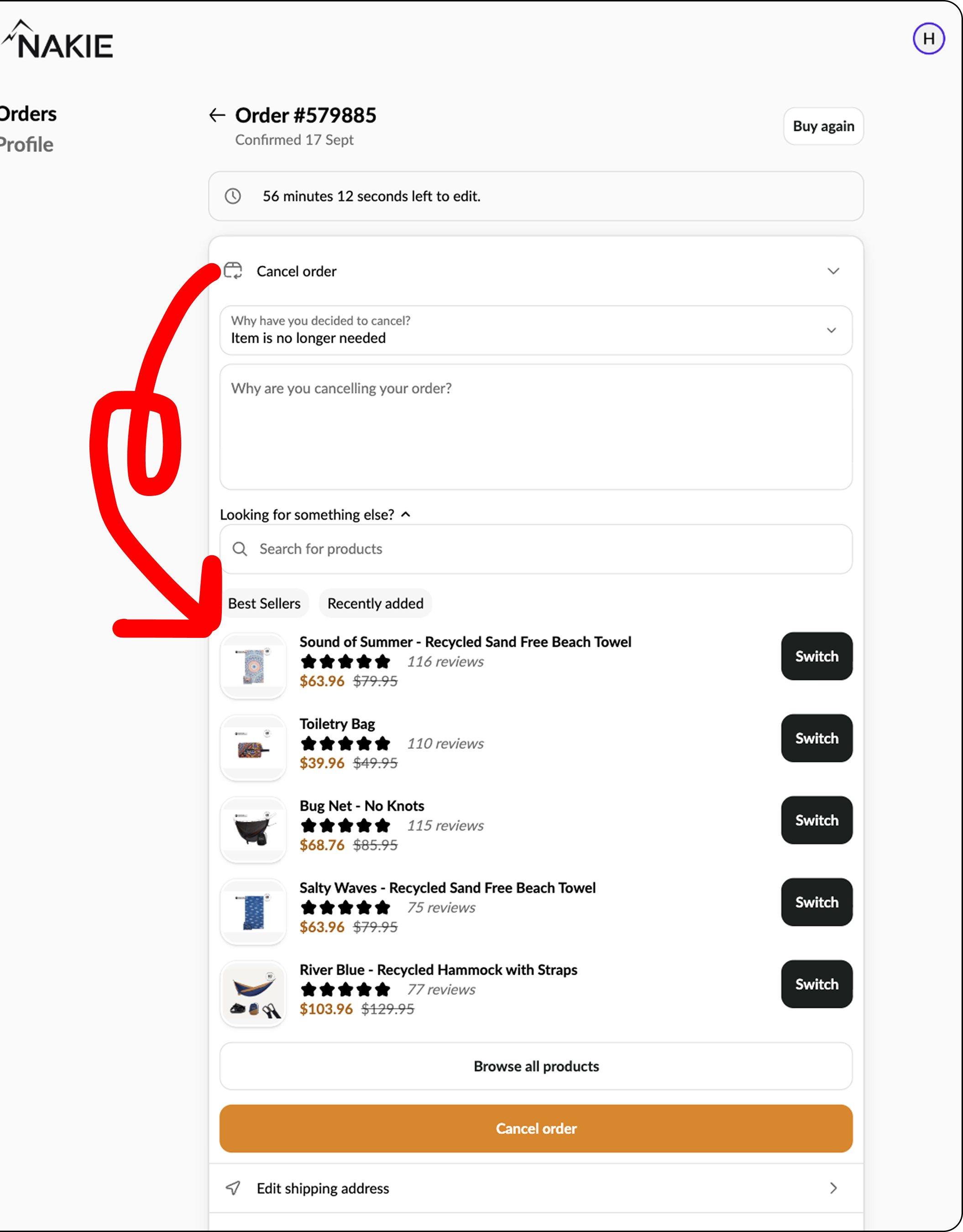
Merchants who offer a clear order-edit path before ship (remove line, reduce quantity, or swap variant) often see fewer “cancel entire order” requests. That can be staff-led in admin or customer-facing within rules you define; apps such as Order Editing on the Shopify App Store target this post-purchase window. This guide stays educational—it does not describe any vendor’s internal cancel mechanics.
Partial removal: what it means operationally
Partial removal usually means one of:
- Delete a line item on an unfulfilled order.
- Set quantity to zero on that line (same outcome if your workflow treats zero as removed).
- Split fulfillment later if one line already shipped—then you are in post-shipment support, not a simple pre-ship remove.
Benefits for the merchant
- Revenue retained on remaining lines.
- One shipment instead of cancel + possible reorder.
- Lower refund volume and payment-processor noise.
- Inventory on removed lines returns to available stock (when configured).
What must still work
| Area | Question to answer |
|---|---|
| Payment | Can you refund or void only the removed line’s amount? |
| Shipping | Does removing an item change shipping tier or free-shipping eligibility? |
| Tax | Do tax lines recalculate correctly for the new subtotal? |
| Discounts | Do automatic discounts break if a qualifying line disappears? |
| 3PL | Does the warehouse get an updated pick list before pack? |
If removing one line breaks a “spend $X get free gift” promotion, support needs a scripted alternative (substitute SKU, manual discount, or explain why full cancel is required).
Full order cancellation: when it is the right call
Cancel the whole order when:
- The customer explicitly wants nothing shipped.
- Risk or fraud review flags the order and policy requires voiding all lines.
- The order is entirely wrong (duplicate orders, test order, wholesale misconfiguration).
- Partial edits are blocked by payment capture, gift card-only payment, or subscription ownership—and reorder is simpler than manual ledger fixes.
Full cancel typically:
- Refunds captured amounts per your policy (original payment method or store credit).
- Restocks unfulfilled inventory.
- Stops pending fulfillments if nothing has shipped.
Communicate refund timing (bank days vs instant store credit) to reduce follow-up tickets.
Refunds and payment: partial vs full
Partial removal usually triggers a partial refund for the removed line’s value (plus proportional tax if applicable). Full cancel refunds the order total (minus any non-refundable fees you disclose in policy).
Merchants should document:
- Whether shipping paid at checkout is refunded when one lightweight item is removed but the order still ships.
- Whether bundles refund as a unit or line-by-line.
- How gift cards and split payments are handled on partial refunds (often manual in admin).
This is general ecommerce guidance, not legal or tax advice. Confirm with your payment providers for each market.
Shipping and the remaining items
Removing a heavy or bulky line might change the package weight class; removing the last item that qualified for free shipping might mean the customer owes shipping on what remains—unless you absorb the difference as goodwill.
Options many teams choose:
- Absorb small shipping deltas on honest mistakes before ship.
- Recalculate shipping on self-service edits and show the customer the new total before confirming.
- Hold fulfillment until partial edits finish so labels are not printed on obsolete totals.
Customer messaging templates (tone, not scripts)
Partial remove (accepted): Confirm which item was removed, the new order total, refund amount and method, and that remaining items still ship on the original timeline.
Partial remove (blocked): Explain why (already shipped, promotion structure, payment limit) and offer the next best path—return after delivery, or full cancel if they prefer.
Full cancel: Confirm nothing will ship, refund timeline, and whether they should place a new order separately.
Consistency matters more than perfect wording; link to a help-centre article when possible.
Self-service vs support-led changes
Low volume stores can handle every partial remove in admin. At scale, repeating the same admin clicks during a launch wastes capacity.
Some merchants allow customers to remove or reduce lines during a short post-purchase window—same family of workflows as address or quantity edits before fulfillment. Whether you use an app or admin-only, the principle is identical: finalize the order contents before the warehouse picks.
Scenarios that push you toward full cancel
Even with good partial-remove habits, these cases often end in full cancellation:
- Single-line orders (remove one item = empty order → cancel is equivalent).
- All lines tied to one non-splittable subscription or prepaid box.
- Digital goods already delivered at purchase.
- Marketplace orders where one vendor cannot be cancelled independently in your admin view.
Support macros should flag these before agents spend time on impossible partial edits.
FAQ
Can Shopify cancel just one item?
For many unfulfilled orders, staff can remove or reduce line items in Shopify admin, which may trigger partial refunds depending on payment status. Customer-facing partial cancel is not universal in core Shopify; merchants add processes or apps for self-service before ship.
Does removing one item automatically refund shipping?
Not always. Refund logic depends on your shipping rules, whether the order still qualifies for the rate paid, and how your team processes partial refunds. Document your rule instead of assuming Shopify defaults match your policy.
What if one item already shipped?
You cannot “un-ship” via a simple line remove. The shipped line follows return policy; unfulfilled lines may still be edited or cancelled separately. Set customer expectations line by line.
Is partial remove the same as a return?
Before fulfillment, removing a line avoids a physical return. After fulfillment, removing a line from the customer’s perspective is usually a return or refund workflow, not an admin line delete.
Should we show “remove item” instead of “cancel order” to customers?
If you can honour partial removes reliably before your cut-off, surfacing remove-line or edit-order actions often reduces mistaken full cancels. Keep cancel entire order available for customers who want zero shipment.
Summary
On Shopify, cancelling one line item (or reducing quantity to zero) preserves revenue and experience when the rest of the order is still wanted and your payment, discount, and warehouse stack supports the new total. Cancelling the whole order should be the intentional choice—not the default because partial paths are invisible.
CX leads benefit from stage-based playbooks, clear refund and shipping rules, and optional pre-fulfillment order-edit options so shoppers fix one mistake without nuking the entire cart. Order Editing is one public Shopify App Store option merchants use for customer-initiated changes before release to the warehouse; evaluate it alongside your cut-off times and refund policy.
For product documentation, visit the Order Editing help centre on orderediting.com.