

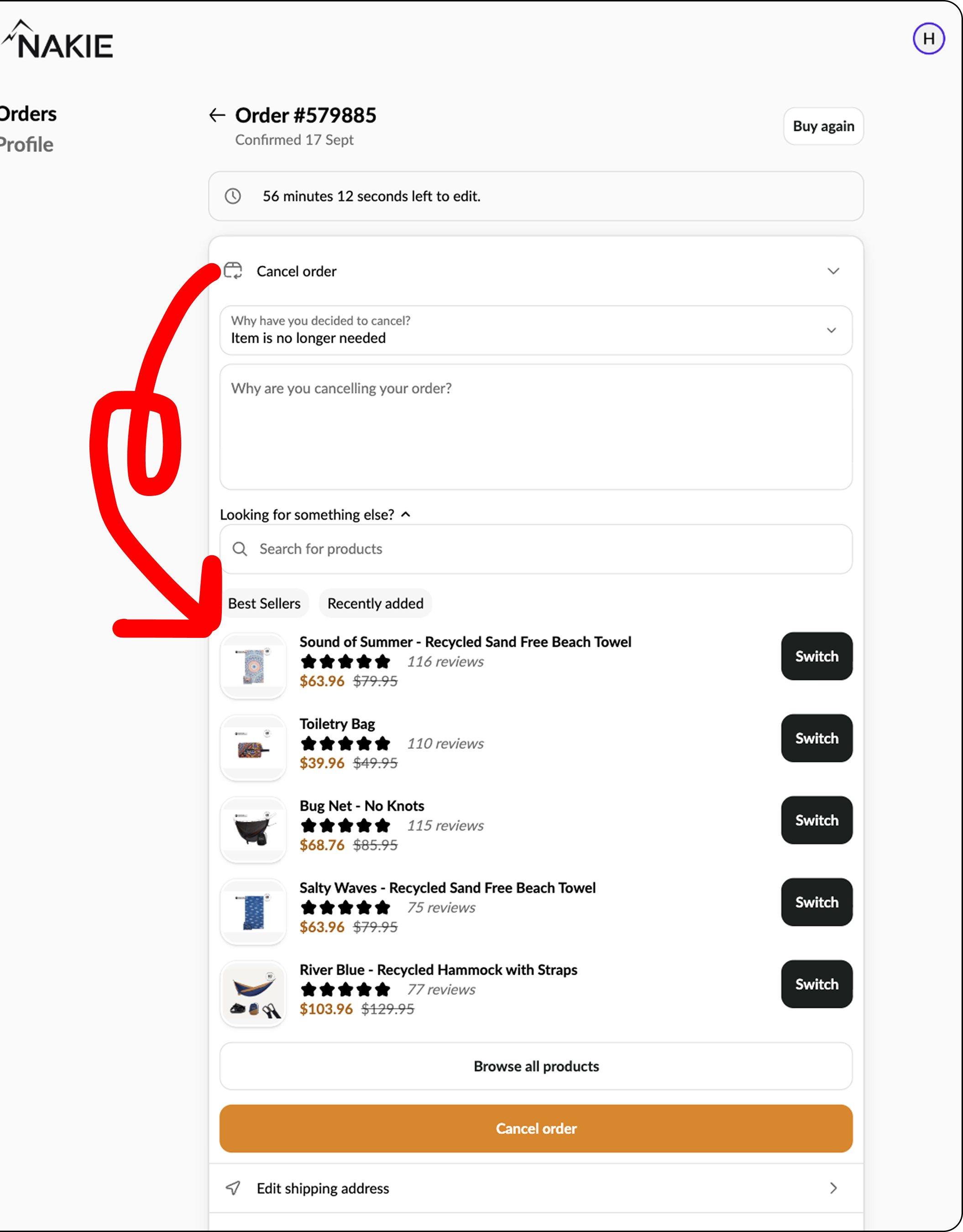
“I forgot to enter my discount code.” After a launch or influencer drop, support queues fill with the same message. The customer already paid full price; they want the promotion applied retroactively. On Shopify, there is no single platform button that rewinds checkout and injects a code into a completed order—merchants choose from a small set of policy options that balance margin, fraud risk, and warehouse timing.
This article is a playbook for ecommerce brands and CX teams: what you can offer, when to refuse, and how to document answers in your help centre and macros.
Quick answer
| Option | Best when | Customer experience |
|---|---|---|
| Cancel and reorder | Order is unfulfilled; code still valid; customer can check out again | Clean discount application; more friction |
| Goodwill partial refund or adjustment | Order already captured; you honour the code value without reopening checkout | Fast resolution; requires finance rules |
| Single-use code on next order | Policy limits retroactive discounts; you still want to save the relationship | Delayed benefit; may reduce repeat regret tickets |
| Decline with clear policy | Code expired, one-per-customer used, or stack rules forbid retroactive apply | Short answer; link to published terms |
Pick one default path per scenario and train support to check fulfillment status and code eligibility before promising savings.
Why forgot-code tickets happen
Checkout is optimized for speed. Customers skip the promo field, assume automatic discounts apply, or paste a code that failed validation silently. Mobile keyboards and wallet pay flows make the field easy to miss.
Tickets cluster when:
- A campaign email arrives after the customer already ordered.
- Influencer codes go live mid-session.
- “Free gift” thresholds confuse shoppers who think a code is required.
Treat forgot-code requests as policy + timing, not as a one-off favour every agent improvises.
Check fulfillment and payment first
Before any discount fix, confirm:
- Fulfillment: Unfulfilled orders can often be cancelled or edited; shipped orders usually need refund-style goodwill instead of reorder.
- Payment: Authorized vs captured totals affect whether you refund a difference or must void and recharge.
- Code rules: Expiry, minimum spend, product exclusions, one use per customer, and stackability with automatic discounts.
A macro line for agents: “I’ll check whether your order has shipped and whether this code is still valid for your cart.”
Option 1: Cancel and reorder
Cancel-and-reorder means cancelling the original order (refund per policy) and having the customer place a new order with the code applied—or sending a draft order / checkout link from admin.
When it works well
- Order is unfulfilled and inventory is still available.
- The discount code is active and valid for the same line items.
- No personalized production has started on the original order.
Trade-offs
- Customer must complete checkout again; some abandon.
- Race on limited inventory between cancel restock and reorder.
- Attribution and session data sit on the new order.
Document refund timing (bank days vs store credit) when the original payment was captured.
Option 2: Goodwill adjustment (partial refund or manual discount)
When cancelling is undesirable—order mid-pick, bundle integrity, or customer unwilling to reorder—teams sometimes refund the difference equivalent to the code value, or apply a manual discount line in admin where payment rules allow.
Policy guardrails many merchants use
- Cap goodwill retroactive discounts to the exact code value (not stacking with other concessions).
- Require proof the code was valid at time of purchase (screenshot, email timestamp).
- Limit one retroactive code honour per customer per year in published terms.
- Escalate high-order-value requests to a lead.
This is general ecommerce guidance, not tax or legal advice. Align with finance on how partial refunds appear in reporting.
When to avoid retroactive refunds
- Codes marked non-retroactive in campaign terms.
- Suspected abuse (serial forgot-code claims, resellers).
- Orders already shipped where partial refund does not match your return policy structure.
Option 3: Next-order discount code
If retroactive application is off-policy, offering a one-time code for the next purchase can preserve goodwill without reopening the original transaction.
Clear messaging matters:
- State expiry and minimum spend up front.
- Do not imply it equals cash back unless it does.
- Use unique single-use codes when fraud is a concern.
This path fits subscription-adjacent brands and high-SKU catalogs where reorder friction is high.
Option 4: Decline with empathy and a clear link
Not every request should be honoured. Published terms might say:
- Discounts must be applied at checkout.
- Codes cannot be added after payment.
- Sale prices are final once the order confirms.
A good decline still helps: link to the help-centre article, restate the rule once, and offer next-order code only if that is your standard concession.
Time windows and cut-offs
Define internal time windows so support does not fight the warehouse:
| Window | Typical merchant stance |
|---|---|
| Minutes after order, unfulfilled | Most flexible: cancel-reorder or goodwill |
| Same day, before warehouse cut-off | Edit or cancel if 3PL has not released pick |
| After pick or label | Goodwill refund or next-order code; rarely cancel |
| After delivery | Usually no retroactive checkout codes; returns policy only if applicable |
Publish customer-facing language like “Contact us within 24 hours if you missed a code at checkout” if that matches operations—do not promise a window you cannot staff.
Fraud and promotion abuse
Retroactive discounts attract abuse patterns: shared codes, expired influencer links, or customers who ordered before reading “cannot combine with sale.”
Lightweight checks:
- Verify code validity in Shopify admin before refunding.
- Match email on the order to the account that should receive one-per-customer codes.
- Flag repeat forgot-code requests on the same profile.
Balance friction for honest mistakes against margin leakage on bad-faith claims.
Relationship to order edits
Some forgot-code cases overlap with order edits (add a line, change quantity) before ship. If the code requires a minimum cart value, editing the order may qualify the cart without a full cancel—if your discount stack recalculates correctly. When automatic discounts and codes interact badly, cancel-and-reorder is often simpler than debugging promotion math on a live order.
Merchants who offer a short post-purchase order-edit window before fulfillment sometimes route “add forgotten item + code” tickets there; apps such as Order Editing on the Shopify App Store focus on customer-initiated changes before release to the warehouse, not on revealing internal discount engines. Evaluate tools against your promo rules and cut-off times.
Help-centre FAQ (customer-facing draft)
Adapt to your brand voice:
Can you apply my discount code after I paid?
Our policy is [summary]. If your order has not shipped, we may [cancel and reorder / issue partial refund]. Contact us within [window] with your order number and code.
My code did not work at checkout.
Check expiry, minimum spend, and excluded products. If the code should have worked, send a screenshot of the error and we will review.
Can I return the order and buy again with the code?
If the order is still unfulfilled, contact us first—we can often fix it without a return. If delivered, standard return policy applies; reordering with a code is subject to current campaign terms.
Do you price-match your own sale if I ordered an hour early?
Define whether you honour short launch windows or treat orders as final at checkout.
Support macros (internal)
Macro A — unfulfilled, valid code: Offer cancel-and-reorder steps or confirm admin cancel + customer reorder link; confirm refund timeline on original payment.
Macro B — unfulfilled, invalid or expired code: Decline per terms; optional next-order code if policy allows.
Macro C — fulfilled or shipped: No cancel; offer goodwill partial refund up to code value OR next-order code per escalation matrix.
Macro D — suspected abuse: Polite decline; no exception without manager approval.
Keep macro URLs identical to public FAQ anchors.
FAQ
Does Shopify let customers add a discount code after checkout?
Standard Shopify checkout does not let buyers apply a new code to a completed order. Merchants handle requests through admin adjustments, cancellations, refunds, or a new order.
Is cancel-and-reorder bad for customer experience?
It adds friction but applies the promotion cleanly. Many brands prefer it for unfulfilled orders when codes cannot be simulated with a partial refund.
Should we automatically apply forgotten codes for VIP customers?
Some brands tier concessions. Document VIP rules separately so frontline agents do not create inconsistent precedents.
What if the code was for free shipping only?
Goodwill refunds are often limited to the shipping amount actually paid, not the entire order discount expectation—state that in policy.
Can we edit the order to add a discount line in admin?
Depends on payment capture and Shopify admin capabilities for your order type. When in doubt, finance should define whether manual discounts belong on the original order or via refund.
How do gift cards interact with forgot-code fixes?
Orders paid fully with gift cards may need store credit or gift card top-up instead of card refunds. Add a gift-card branch to your macro tree.
Summary
When a shopper forgot a discount code after placing a Shopify order, merchants choose among cancel-and-reorder (cleanest for unfulfilled orders), goodwill partial refunds, next-order codes, or a clear decline tied to published terms. Fulfillment timing, code eligibility, and fraud limits should drive the answer—not whichever option is fastest for the agent.
Brands that publish time windows, FAQ language, and internal macros turn promo regret into a repeatable workflow. Optional pre-fulfillment order-edit options can help related cases (cart changes before ship); Order Editing is one Shopify App Store option merchants evaluate alongside their promotion stack.
For product documentation and help-centre planning, visit the Order Editing documentation on orderediting.com.